Thirteen Ways to Tell a Hidden Gem From a Pretty Spine: The Owl's Field Guide to the Indie Shelf
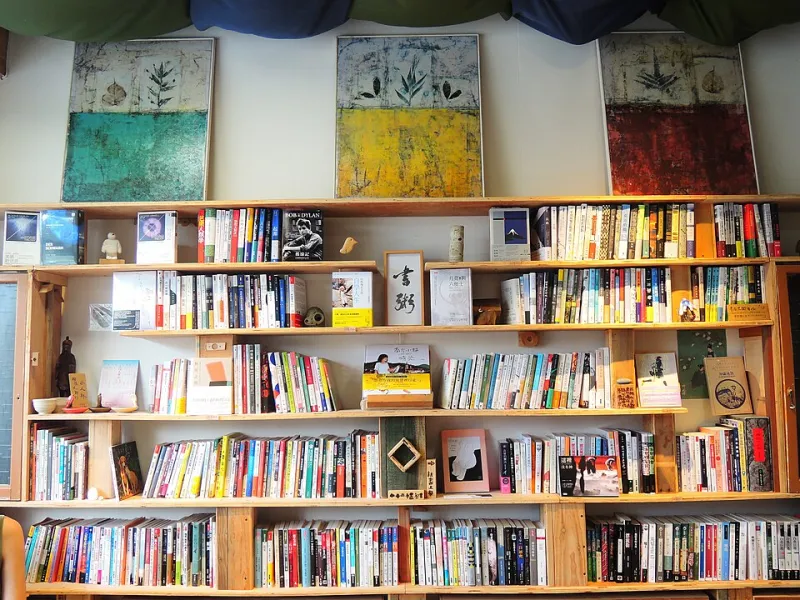
Photo: 舟集 Toadboat, CC BY-SA 4.0, via Wikimedia Commons
There is a specific kind of bookstore moment we've all had: you're standing in the fiction aisle at Green Apple Books on a Tuesday afternoon, an iced coffee sweating in your hand, and every spine in front of you has a blurb from someone you've never heard of. The safe move is to walk out with the book everyone on your feed is reading. The better move is to learn how to read a shelf.
Consider this the Storied Owl's field guide — a scouting checklist, not a rulebook. Thirteen small habits that will help you separate a genuinely interesting small-press book from a handsome object with nothing behind the jacket.
Part One: The Imprint Clues (Points 1–3)
1. Look at the publisher line on the spine before you look at the title. Independent presses have distinct personalities, and after a few months of low-key noticing you'll know which ones you trust. Two Lines Press, Archipelago, Deep Vellum, Transit, Restless, Ugly Duckling — a dozen names is plenty to start. When a spine says "Two Lines Press" and you remember liking two of their books, that's information no algorithm can give you.
2. Flip to the copyright page. It takes four seconds. You're looking for a translator credit, an original-language line, a "first English-language edition" note, an afterword. These are fingerprints of a publisher who paid attention. A copyright page that lists a translation, a rights holder, and a subsidy grant is a small story about how the book got here.
3. Note the funding footprint, gently. Grants from the National Endowment for the Arts, PEN America, the Mellon Foundation, or a foreign cultural institute aren't a quality guarantee — plenty of wonderful books have none, and plenty of dull ones have three. But they tell you somebody in an office believed in this book enough to fill out a form. That's a signal, not a verdict.
Part Two: The Staff Note Test (Points 4–6)
4. Read three shelf talkers, not one. The handwritten cards are the closest thing to a conversation with a bookseller. Read three, then notice which one you'd want to keep talking to — that's your person. At Powell's, the staff recommendation cards carry initials; at Malaprop's in Asheville, the shelf talkers are gloriously opinionated. Find the initials you trust and ask for that bookseller by name.
5. Beware enthusiasm without specifics. "Unforgettable." "A masterpiece." "I couldn't put it down." Fine words, low information. The talkers worth your time mention a sentence, a character's job, a city, a comparison that surprises you. A bookseller who writes "the middle third is all basement and boiling kettles" has actually read the book.
6. Ask the hand-sell question. "What's the book you've been pressing on people this month?" It's a different question than "what's selling," and it produces a different answer. Booksellers keep a private shelf of these. It is often near the register.
Part Three: The Voice Test (Points 7–9)
7. Read the first page aloud, in the store. Quietly. Nobody minds. Voice is the one thing blurbs can't fake. If the first paragraph sounds like every other first paragraph published this year, put it back. If a sentence makes you look up, keep going.
8. Then jump to page sixty. The first chapter is a performance; page sixty is the book. Read a handful of lines there. Does the prose still have a pulse? Is anyone doing anything? This two-minute test has saved us more money than any review subscription.
9. Check the dialogue-to-description ratio you actually enjoy. Cozy readers, literary readers, and thriller readers all have a preference, and small-press books vary wildly. The sample pages tell you instantly whether this author will bore you by chapter five.
Part Four: The Cover Tells (Points 10–11)
We are not judging a book by its jacket. We're reading it.
10. Notice the craft, not the genre. Small presses often spend their whole cover budget on one image, so you'll see illustration, texture, uncoated stock, French flaps, a font choice that came from a designer rather than a template. That effort is usually echoed inside. Conversely, a photo of a woman's back with a blurred city behind it is not automatically bad — it's just not telling you anything new.
11. Hold the object. Sewn binding, decent paper, a spine that opens flat on the table. These are manufacturing decisions made by people with a long view. The owl is fond of a well-made paperback the way other people are fond of good cookware.
Part Five: The Take-a-Chance System (Points 12–13)
12. Build the stack on purpose. Every visit, take home one wildcard, and cap the wildcards at two. Here's our standard recipe: one book from a press you already trust, one from a press you can't pronounce, one staff pick with a specific blurb, and — best of all — one from the "shelved wrong" cart near the front desk, where misfiled gems go to be discovered.
13. Keep a one-line ledger. Index card. Back of a receipt. Note the title, the press, the date, and one line: keep or leave. Over a year you'll have a personal map of which imprints, translators, and booksellers lead you to the good stuff. That's how the scouts do it — not with taste, but with taste plus notes.
A Short List of What the Owl Never Does
It never buys a book because a stranger's blurb calls it "the next anything." It never puts a book back because the type is odd or the author has a difficult name. And it never walks out of a store empty-handed on a rainy afternoon — that's how you end up with a shelf full of books you were told to want instead of books you found.
The point of all thirteen points is confidence. The indie shelf is not a gamble; it's a conversation with people who read more carefully than the market does. Learn four of these habits and you'll stop needing someone else's list.