The Passport Shelf: How Seven Small US Presses Made Translated Fiction a Book-Club Habit in 2026

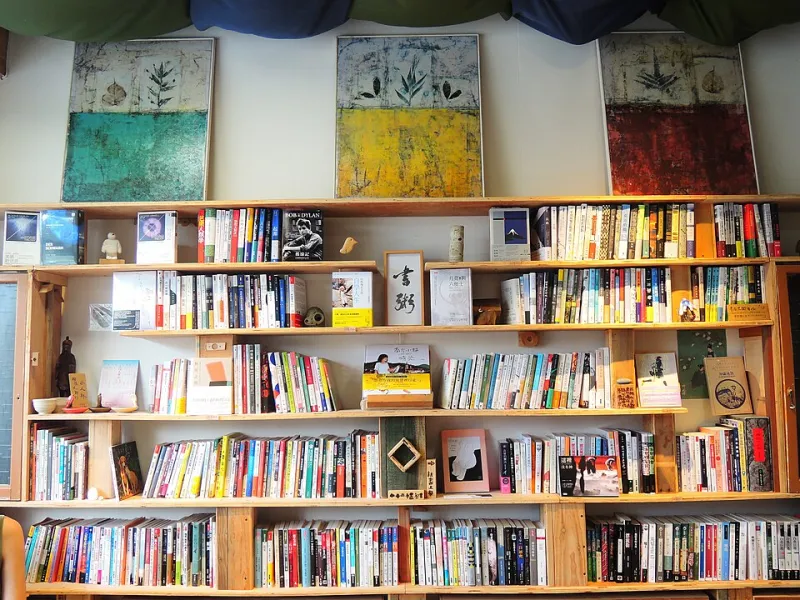
Photo: stack of translated literary novels on wooden table open book with foreign language text, via i.pinimg.com
Walk into a book club meeting in Minneapolis or Richmond this fall and there's a decent chance the book under discussion was written in Portuguese, Korean, Arabic, or Catalan. That's not a hunch; it's the shelf. Translated fiction and nonfiction have spent the last several years migrating out of the academic corner and into the general-interest stacks of American independent stores — and the small presses that made that migration possible are expanding their lists again in 2026.
This is a story about logistics as much as literature. Because the interesting question isn't only "what's being translated" — it's who pays for it, who holds the rights, and how a book from a small press in Brooklyn or Dallas finds its way onto a library hold list in Ohio.
The Shelf Where the Passport Stamps Are
The first thing to understand is that translated literature in the US has never been a mass-market business. It has been a curatorial one. Archipelago Books has been quietly building a world library from Brooklyn for two decades. Open Letter, based at the University of Rochester, has long treated translation as an academic and civic project at once, and its Three Percent project has tracked the numbers with a grumpy honesty that the industry needed. Deep Vellum in Dallas has grown a translation program alongside a bookstore and a small-press distribution arm.
In 2026, that curatorial model is being copied by a newer generation — presses founded by translators, by booksellers, by people who wanted to publish the book nobody else would bid on. The lists are getting broader in geography: more Korean, more Arabic, more Indigenous-language work in Spanish, more Catalan and Galician, more work from West and Central Africa.
Why Book Clubs Are the Engine
Book clubs are the best thing that ever happened to translated fiction, and here's why: they don't need the book to be a bestseller. They need it to be discussable.
A translated novel often arrives with a translator's afterword, an unfamiliar political context, and a structure that doesn't behave like a three-act screenplay. All of that is a liability on a bestseller list and an asset in a living room with nine folding chairs and a plate of cookies. Groups that once defaulted to whatever topped the paperback chart are now reading their way through a press's catalog one title per month, because a small press list functions like a syllabus somebody else already did the work on.
What Goes On Behind the Rights Desk
Readers rarely see the machinery, so a quick tour. A US publisher acquires translation rights from the original publisher or a rights agent, usually territory by territory and often for a limited term. The advance can be small — low four figures is normal for a debut in a less-common language — and the translation itself is usually funded separately, sometimes partly by the publisher, sometimes partly by grants from the National Endowment for the Arts, PEN America's translation fund, the Mellon Foundation, or a cultural institute in the source country.
That funding shapes what gets translated, and it's worth being honest about the tradeoff: subsidy makes risk possible, and it also means certain literatures are better supported than others. Discoverability is the other bottleneck. A big house can buy a table at the front of a chain store; a press with two employees relies on booksellers, library selectors, reviewers, and readers who talk.
Which is where you come in, by the way. Recommending a translated book is genuinely the distribution system.
Seven Presses Worth a Bookmark
One title each, chosen as a doorway rather than a monument.
Archipelago Books (Brooklyn) — The most reliably beautiful list in American publishing, with a catalog that runs from Hungarian war fiction to Caribbean prose poetry. Start with Magda Szabó's Katalin Street, translated by Len Rix, then work outward.
Open Letter Books (Rochester, New York) — Formally adventurous, frequently difficult in the best way. Rodrigo Fresán's The Invented Part, translated by Will Vanderhyden, is a good test of whether you like your novels to contain other novels.
Deep Vellum (Dallas) — A press that grew out of a translation obsession and now anchors an entire literary ecosystem in Texas. Try Cristina Morales's Easy Reading, translated by Kevin Dunn, a book that argues with itself for four hundred pages.
Two Lines Press (San Francisco) — Slender, strange, and dependable, with a long-running dedication to Catalan and Latin American writing. Their chapbook-length translations are the perfect book-club palate cleanser.
Restless Books (Brooklyn) — International fiction with a journalistic spine, plus a translation-prize program that has brought new translators into print. Sinan Antoon's The Book of Collateral Damage, translated by Jonathan Wright, is a devastating place to begin.
Dalkey Archive Press (Illinois) — The institutional memory of experimental world literature in the US, with a backlist that reads like a secret curriculum. Kjersti A. Skomsvold's The Faster I Walk, the Smaller I Am, translated by Kerri Pierce, is short, strange, and unforgettable.
Ugly Duckling Presse (Brooklyn) — The poetry-and-essay wing of the translation boom, where bilingual editions and handmade objects still matter. Browse their Eastern European and Latin American poetry translations; you'll find something no one in your group has read.
Reading Without a Syllabus
A few practical notes for anyone building a translated-fiction habit. Don't try to be comprehensive; try to be loyal to two or three presses and let their catalogs teach you. Read the translator's note — it's often the best essay in the book. Skip a book without guilt if the voice doesn't grab you in twenty pages; translation is a wide field, and there is no required reading order.
And when you finish something good, tell the person who runs your local store. In this corner of publishing, word of mouth isn't marketing. It's the whole supply chain.