Reward the Browsing, Not the Buying: A Case for Shelf Citizenship at Your Local Indie

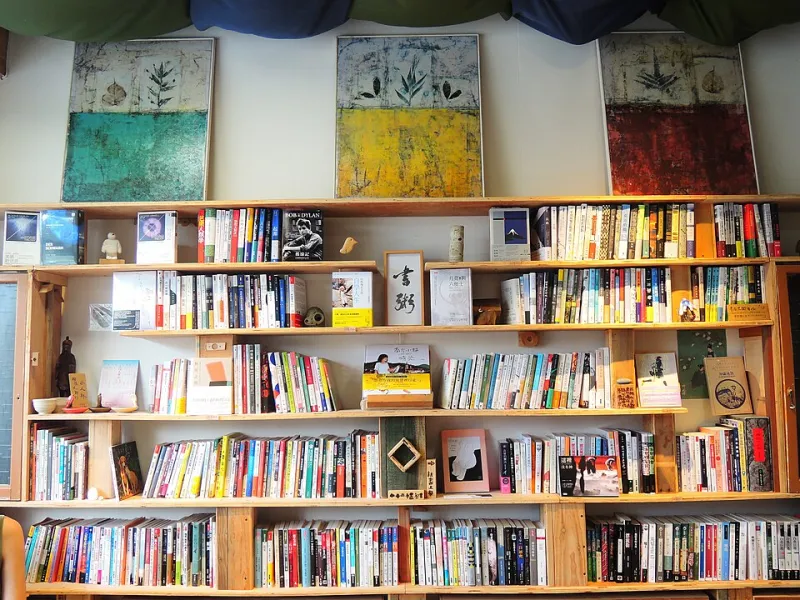
Photo: independent bookstore counter with loyalty punch card and handwritten staff recommendation cards, via logolook.net
Every independent bookstore in America has, somewhere near the register, a small dog-eared card with ten boxes on it. Buy ten books, get a few dollars off the eleventh. It's a nice gesture. It is also a weirdly narrow definition of loyalty, and we'd like to argue — politely, with a pastry — that it's due for a rethink.
Consider who actually keeps a bookstore open. It isn't only the person who buys four books a year. It's the person who comes to the reading on a Thursday, buys nothing, and tells two friends about it. It's the reader who writes a shelf talker for a book the staff forgot to promote. It's the neighbor who brings a visiting cousin in and says, "this is the place." None of that shows up in a punch card.
The Bookstore Already Knows This
Booksellers are not naive about this, by the way. Ask any owner and they'll tell you the same thing: the customers who matter most are the ones who treat the store like a third place. Independent shops have survived the last decade on community — book clubs, author events, banned-book tables, story hours, puzzle nights, the whole calendar.
So why do the loyalty programs still look like a gas station rewards app? Mostly inertia. Punch cards are cheap, familiar, and easy to explain. But the next wave of indie loyalty programs has an opening to be warmer, weirder, and a lot more accurate about what loyalty honestly is.
What Shelf Citizenship Looks Like
Here's the model we keep sketching on napkins at Storied Owl. Call it shelf citizenship: a point system where the currency is curiosity.
You earn a stamp for showing up. Attending an event, writing a shelf talker, filling out a "staff pick" ballot, bringing a friend to a reading, donating a gently used book to the store's swap shelf, joining a book club, answering a staffer's question about a book you loved — all of it counts.
You earn a second kind of stamp for taking a chance. Buying a book from a small press, buying a translated title, buying from the "shelved wrong" cart, or completing a bingo square like "read a book by an author from a country you've never visited."
And yes, purchases still count. Nobody is suggesting bookstores stop selling books. But a purchase is one line in a bigger ledger, and a program designed around that single line will always undercount the people who make a store feel alive.
Five Badges, One Ledger
A practical sketch, because vague enthusiasm is the enemy of a thing actually happening:
The Fledgling. First visit logged. That's it. Small, gentle entry point — you get a bookmark and a genuine welcome, which is more than most programs offer.
The Perch. Attend one event or write one shelf talker. Redeemable for a discount on a staff pick, because the store should be rewarded for noticing you, too.
The Roost. Take a chance on three small-press titles in a year. Redeemable for early access to the store's signed or limited editions.
The Nightjar. Bring someone new into the store. This is the badge we'd be proudest of, honestly — it's the closest thing retail has to a measurable act of love.
The Long Flight. Complete a whole reading year: twelve books, four events, one shelf talker, one recommendation to a stranger. The prize? A shelf in the store named after you for a month, or a paid-for seat at the next author dinner. Something with a little theater in it.
Why This Is Also Just Good Business
A cynic might say this is a lot of infrastructure for people who aren't spending much. But look at what the badges actually do. They create reasons to come in on a Tuesday. They give shy readers a low-stakes way to participate. They generate shelf talkers — free, authentic, better-converting marketing than any display the publisher sent. And they turn the store's own community into its recruiting department.
Most importantly, they measure something punch cards can't: whether a person is becoming a regular.
The Reasonable Objection
Fair counterpoint: programs like this can be a logistical headache for a two-person shop already running on goodwill. Software costs money, staff time is finite, and a badge system that feels like homework is worse than no badge system at all.
Which is why the version we'd actually recommend is analog and modest. A paper passport. A stamp at the desk. A bulletin board with index cards. Twenty dollars of printer ink. If it works, it works because of the conversation at the counter, not the database behind it.
How to Ask For It
If you love a store, tell the owner you'd show up for something like this. If you own a store, steal the idea and make it yours — rename the badges after your cat, your store's mascot, the neighborhood. The owl is not precious about this one.
Because at the end of the day, loyalty isn't a discount. It's the moment a customer stops being a customer and starts being a regular. A program that notices that moment is a program worth stamping.